Table of Content
They are available for purchase in stores or online. Women who are breastfeeding, people with high blood pressure, or people who are dependent on certain drugs cannot use this remedy to their advantage. A baking soda bath is not recommended for open wounds.
For the quickest results, do add 4-5 tablespoons of oatmeal powder in your bath-tub and soak your body in warm water. Applying oatmeal powder-and-water paste on your distressed area may bring much relief. Drawing the blisters out of a poison sumac rash is one of the best ways to relieve itching and reduce inflammation. If anything makes direct contact with the poison sumac plant, it releases an urushiol oil.
Poison Oak
Over-the-counter medications can help to reduce swelling and itching. Calamine lotion or corticosteroid creams may be applied to the skin. Diphenhydramine, an antihistamine, can be given by mouth to relieve itching and help the people to sleep. Zinc oxide can help to protect the skin and dry the blisters.

Poison sumac, also known by its species name Toxicodendron vernix, is a toxic plant found in wet areas of the southern and northern United States. The plant has a sap oil known as urushiol that causes an itchy, red skin rash. The rash is caused by an allergic reaction to the oil. Poison sumac is related to poison oak and poison ivy plants, which also cause a similar rash. Poison sumac rashes are not common because the plant is not so widespread.
Home Remedies to Get Rid of Flies
But don’t rush to open the cap and start pouring it on the affected area. Rather, take a mound of cotton, wet it with this liquid and place the cotton ball on the rash. The anti-bacterial as well as anti-fungal element in Apple Cider will suck the toxin out. If there is no cotton ball in the house, then soaking a paper bag in the solution and placing it on your skin too can yield the same result. We’ve put together the following list of 13 home remedies that have proven helpful to others for relieving the symptoms of poison sumac.
Its leaves are smooth-edged and cluster in groups of three, five, or seven. Do not delay because this can help prevent further spread of any reaction. Lastly, the blisters form a crust, and the rash disappears in 2–3 weeks, even without treatment.
What Is Chronic Stress? Learn How to Overcome Naturally
The blister can break open and cause unwanted issues. And yes, consult a doctor if the irritation gets out of hand. So, keeping the two things in mind, let us move on.

One thing to note is that these plants also have non-poisonous species. So, whenever you see a plant with oval, pointed leaves having red stems, be assured of it being aPoison Sumac. Colloidal bath treatments and other oatmeal products are available at drugstores. One such example is Aveeno Soothing Bath Treatment. Made from finely ground oats, colloidal oatmeal doesn't sink to the bottom of the bath. Instead, it disperses throughout the water, coating skin and temporarily relieving the itch.
All remedies and treatments mentioned here are only for general informational purpose. Homeremediescare.com does not provide medical advice, and should not be treated as such. Consult with your health care professional or doctor before applying any of given tips and remedies here. Do you know that the magnesium sulfate in Epsom salt can treat your red, hot, blistering skin? If you are struck with Poison Sumac leaves, then go for an Epsom salt bath as soon as possible. Take two tablespoons full of Epsom salt and mix it well with a tub full of water.
The plant may also grow on low plants, poles, and trees. Below are answers to some frequently asked questions about poison ivy. There are signs of an infection, such as redness, swelling, or pain.
Research states that the application of this ceramide improved skin problems. Needless to say, getting to know the symptoms will save you from serious infections caused by Poison Sumac. Scratching the affected area increases the chances of bacterial infection.
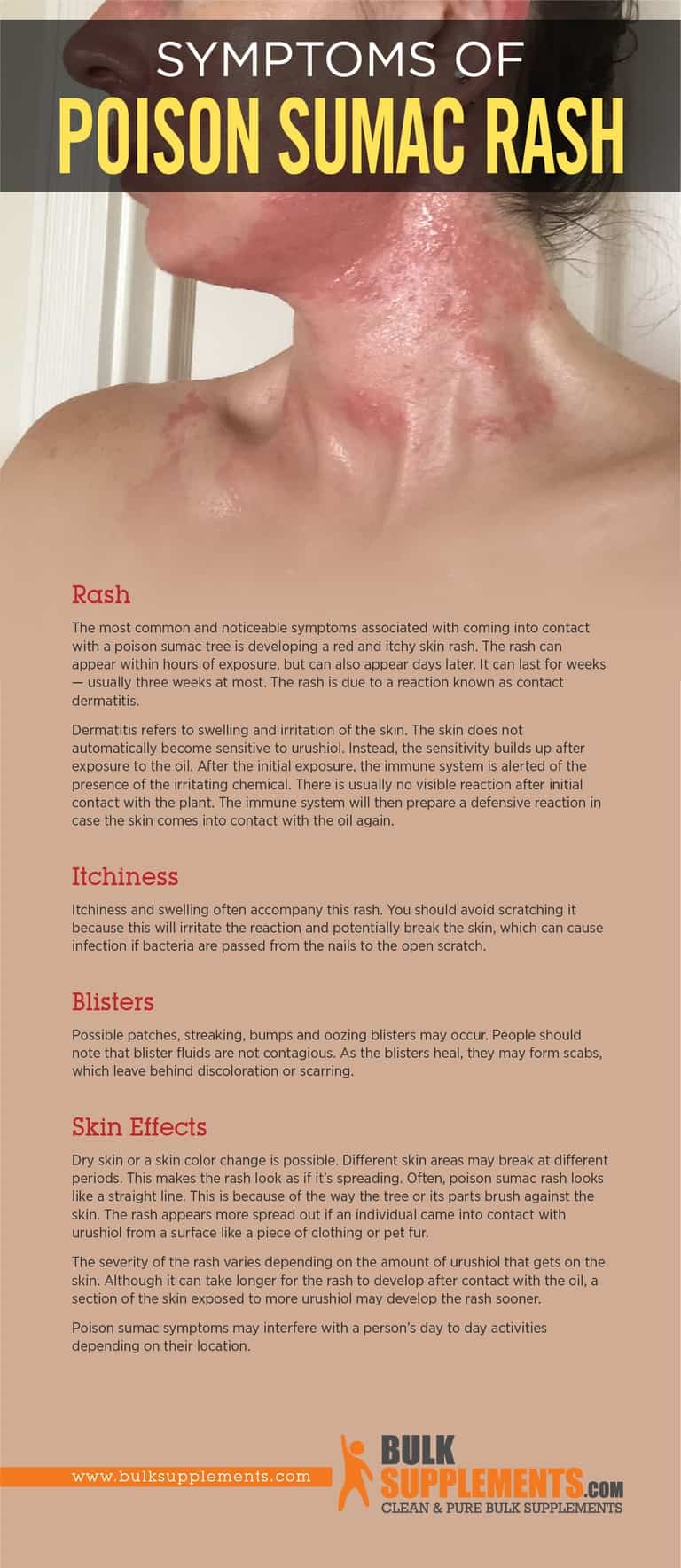
Experts usually recommend applying an over-the-counter antihistamine product to itchy skin, such as pink calamine lotion. Calamine lotion has a cooling, soothing effect that can distract you from itchiness. It’s safe to use up to four times daily and be left on your skin to dry overnight while you sleep. Most doctors will recommend using calamine lotion until oozing stops and then letting your skin heal so you don’t remove too much moisture.
With much scrutiny, you can be able to recognize these 3 plants individually. But do keep note that, once you brush against any of these three, it can bring on flaming skin, oozing blisters and lots of pain along with it. If an area has each of these three plants, then it’s quite hard to tell – which one caused the skin rashes. If a rash and blisters develops, the patient should avoid scratching the skin because organisms can enter the broken areas and cause an infection. However, a person should contact a doctor if the rash is widespread over the body or occurs on the face or genitals. It is also important to see a doctor for any symptoms of infection.
As a dietary supplement, take 1,000 mg (rounded ½ tsp) of aloe vera extract once daily with 8 oz of water or beverage of choice, or as directed by your physician. This includes the slightest contact with the plant, such as brushing up against its leaves. A reaction can be triggered within minutes of coming into contact with the plant’s stems, leaves and roots and the person might not even realize it. If a rash begins to form, repeat this process twice a day for three days to stop urushiol from binding to your skin and spreading the rash. Apply soothing ingredients to your skin such as calamine lotion, colloidal oatmeal, or coconut oil and essential oils.
Create a bright and beautiful "Batman" Poison Ivy makeup look for Halloween
Not only will it reduce the itching and swelling, but it will minimize the spread of the urushiol oil and keep the rash contained to a smaller area. One of the most effective home remedies to help relieve the symptoms of poison sumac is oatmeal. While poison ivy, oak, or sumac rash can be persistent, these rashes are not recurrent. The rash does not lie dormant and then reappears in the same spot. You may also have a bacterial or fungal infection in the same spot that requires treatment. The rash caused by poison ivy, oak, and sumac is an allergic skin reaction to an oil called urushiol that is inside the plant.

Some people also develop a permanent scar where the skin has turned dark, or a portion of the skin turned black. The blister or bump typically begins to dry or harden after a day or two. As the blister dries or hardens, it may turn a shade of yellow to brown or darker. A blister or tiny bump will appear where the fluid comes into contact with your skin. The blister or spot might be red or have a pink tint, and it may feel soft to the touch.


No comments:
Post a Comment